Showing posts sorted by date for query goulet pens. Sort by relevance Show all posts

Monday, December 17, 2012

About the fabulous Platinum Preppy fountain pen, and the eydropper conversion thereof

Platinum Preppy fountain pens, eyedroppers and with converter

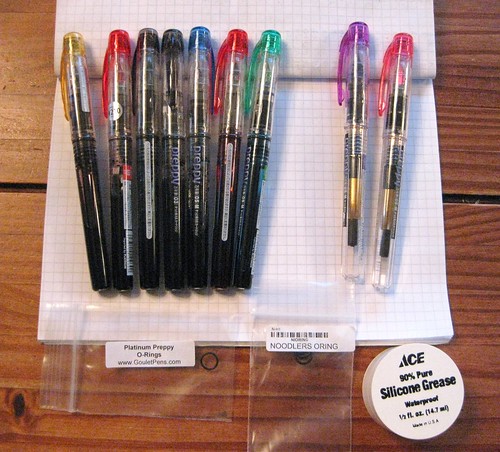
A blog reader recently spotted a Platinum Preppy fountain pen in one of my recent blog posts, and asked how I "filled the barrel completely." That practice is called an eyedropper conversion (when you completely fill the barrel of a pen with ink, and then just screw it shut, that's called an eyedropper pen, because you used to fill with an eyedropper), and Platinum Preppies are famous for this. I love 'em. You can see the difference in ink capacity in the photo above - the 7 pens on the left are all eyedroppers, with nearly the entire barrel full of ink, whereas the 2 pens on the right are using Platinum converters, which hold only a scant fraction ink in comparison.
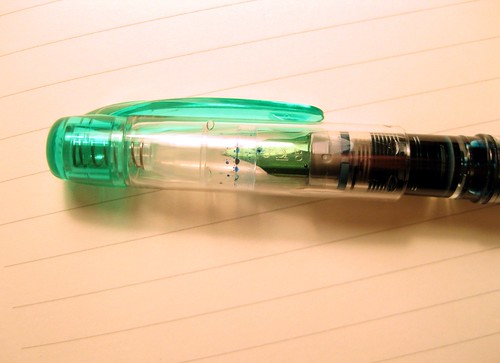
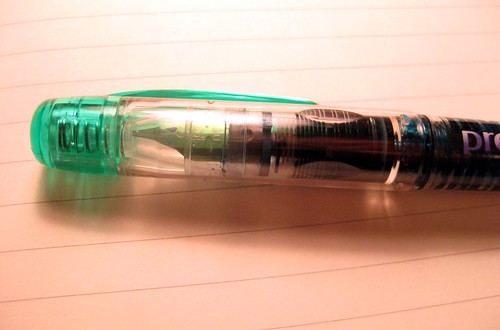
Platinum Preppy fountain pen cap - see the inner plastic cap?

I have no fewer than 7 (actually I have 10, I missed a few in my last count!) eyedropper Preppies going at once; that is my current favorite fountain pen option. They write beautifully, they hold a ton of ink, and the Preppies have some thingamajiggy device (that's a technical term, folks) that is spring-loaded inside the cap so that it makes them extremely airtight, and therefore unlikely to dry up for months. You can see a close-up of it above.

Platinum Preppy fountain pen - awesome cap

You can see above how when the pen cap is closed, the nib pushes it tight inside the end of the cap. That special inner airtight cap thingamajiggy is a handy thing for me, since - I confess - I do often neglect my pens. I can manage not to write with one of these pens for months (it's happened), and then when I pick up the pen again, the ink is not evaporated or dried up at all. Love it. But I digress - let's get back to the eyedropper info.
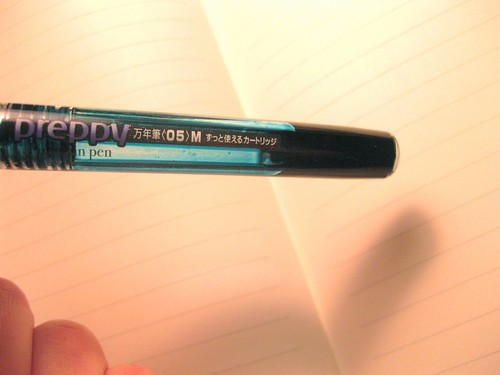
Iroshizuku Shin-Ryoku ink in Platinum Preppy eyedropper

If you are at all a pen or ink geek like me, you may think it's pretty cool to see that ink sloshing around in the clear pen barrel like that. The ink in this pen is Iroshizuku Shin-Ryoku, a lovely deep green with quite a lot of blue in it.

So, an eyedropper conversion is very easy to do properly, and there are tons of online resources to get you through it... even those of you that, like me, are loathe to undertake any fancy pen modifications.

My favorite two articles are from JetPens and Goulet Pens (which are, incidentally, two of my favorite online retailers for all of my pen and ink needs). The JetPens article, "How to do an Eyedropper Pen Conversion, shows a really nice tutorial using a series of photos. I prefer step-by-step photos, because my internet connection does not always allow me to stream videos very successfully. Goulet pens has a tutorial, "Converting a Platinum Preppy to an eyedropper pen," and theirs has both photos and a how-to video. Both Jetpens and Goulet Pens sell the supplies (o-rings, and maybe silicone grease) to do the eyedropper conversion, which is extremely easy and no-fuss. I do recommend using the silicone grease. JetPens calls it optional, but I consider it pretty much essential.
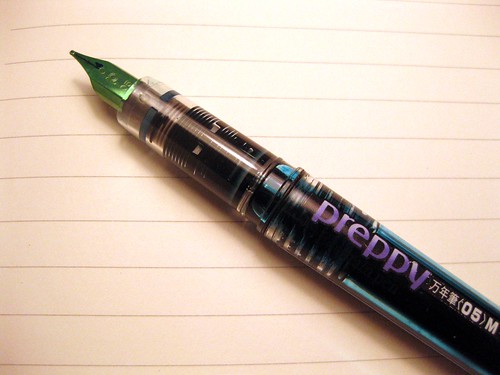
Platinum Preppy eyedropper - see the o-ring?

I have done countless Platinum Preppy eyedropper conversions, and only ever had one leak on me. The reason it leaked was because I screwed it closed too tightly and cracked the barrel. Platinum Preppies are very well-made pens, but they are inexpensive, and the plastic isn't perfect. When you have a rubbery o-ring in there, there's a lot of "give" when tightening the barrel. I thought, the tighter the better, but that is not the case. It's a little counterintuitive for me NOT to screw the eyedropper pen full of ink as tight as possible, but lesson learned; I close them gently now, and haven't had a cracked barrel since.
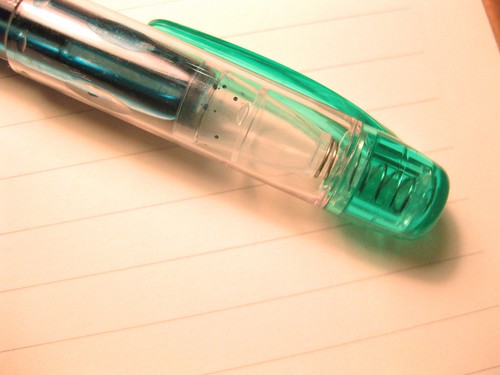
Platinum Preppy pen cap, posted

As the name implies, the first eyedropper fountain pens were filled with eyedroppers. There are some inks that come in bottles with eyedropper tops, and those are handy - but some people use a syringe to fill their pens. I use disposable plastic pipettes, which can be found all over the place (I get mine on eBay), and I know they are not terribly sustainable, but plastic pipettes keep your ink safer from contamination than a syringe would do. They are also faster, and require no cleaning because you just throw the darn things away. Granted, you have to be quite the intense fountain pen and ink geek in order to have a supply of plastic pipettes on hand, but... we all have our quirky hobbies.

My thorough blog reader also asked about air travel and these pens, which is a wise question indeed. The major advantage of an eyedropper pen, especially one with a large barrel like the Preppy, is that it holds tons of ink and lasts for ages. The disadvantage is that it is very susceptible to heat and air pressure. If the ink is very low in the barrel, the heat of your hand itself will make the ink "blort" (another technical term, folks) and flow out of the pen too quickly. On airplanes, they can also spit out some ink. This is very easily handled. When I fly with fountain pens (and I always take pens with me when I travel, so I should just say "when I fly"), I wrap them all in a paper towel or two inside a plastic ziplock baggie. Most of the time, there are no leaks. If there is a leak, the paper towel inside the baggie absorbs the excess ink, and the plastic baggie keeps it from making a mess on anything else in my bag. The one time I had a Preppy leak fantastically on a trip, it was a little messy when I opened the bag to clean off the pens, but since the bag was clear, I knew what I was in for. (It was also my own fault, sort of - I should have known better than to fly with the ink level so low, and therefore more susceptible to changes in pressure.)

If I've made you all excited to get some Platinum Preppies of your very own, you can get them at JetPens or at Goulet Pens, along with eyedropper conversion options from either site. In the top photo on this post, you can see the little baggies of o-rings I've purchased from both Goulet Pens and Jetpens. I always have extra supplies on hand, so I can throw together an eyedropper conversion whenever the whim strikes me. [UPDATE: It seems JetPens no longer sells o-rings. You can get o-rings from Goulet Pens.]

Happy writing!

Wednesday, January 4, 2012

2011: a year in mail

Letter logs for 2011

I've been wanting to do this for ages now, and the start of a new year seems the perfect time to do it, so hear ye, read ye: I give you one heck of a massive blog post chock full of information on exactly how I keep my correspondence records, complete with monthly and yearly statistics at the end. (Beware, this may be a frightening glimpse into my quirky depths. But isn't that why we all read blogs anyway?)

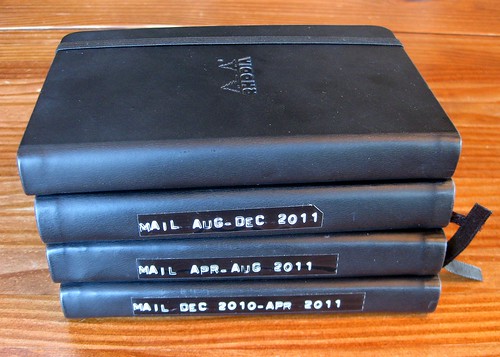
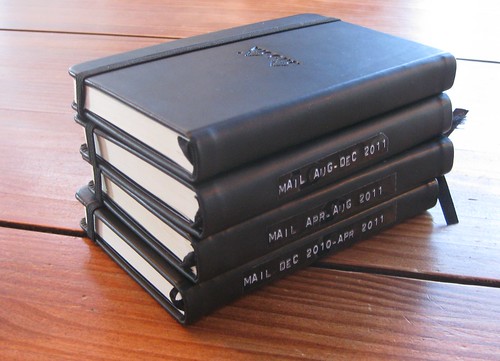
Every day I record my mail, both incoming and outgoing. I haven't settled on a good name for the books yet; I refer to them as letter journals, mail logs, correspondence records, letter logs, and mailbooks, depending on my mood. I have come to favor the small lined Rhodia Webnotebooks for this task, for a variety of reasons: they're the perfect size for my needs, the paper takes fountain pen ink beautifully, they travel well, I like the weight and color... I could go on and on. Sometimes I think about switching it up, but for now I like this habit. Also, the month/year labels just fit on them so darn nicely.

I just started a new one recently, and I average about 4 months of mail per book. (I recommend Rhodia Webnotebooks from Goulet Pens and Jetpens; they do not endorse or sponsor me in any way, I am just a very satisfied customer of both fine online retailers.)

I record incoming and outgoing mail separately. For incoming, I do all the day's mail (or multiple days, if I've been away or - gasp! - so busy I can't make it to the mailbox) in one sitting, logging it as I read it. All received mail gets recorded with a Pilot Varsity disposable fountain pen, refilled with Noodler's Heart of Darkness (black, black, very black and permanent) ink. Outgoing letters get logged as they're written, using the last color ink I used for the letter.

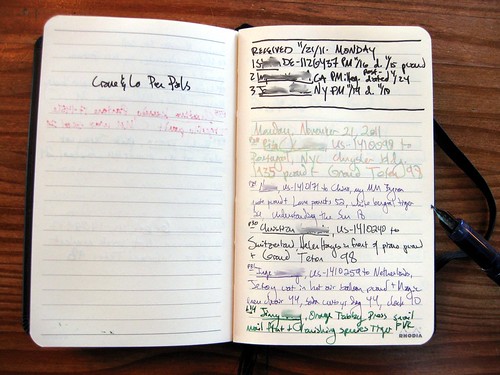
Letter journal / mail log

Here's a fair sample page with personal information blurred out. In the received section, I note the sender, location/US state or country (with Postcrossing ID if applicable; other notes, like swaps or misc info like background on the sender, I list on the facing page), postmark date or note illegible, item date or note undated, and postcards get listed first and noted as postcards.

A while back, I started satisfying some of my own curiosity with statistics. Nothing mathematically fancy here, just plain counting. It greatly facilitates my own tallies if I designate letters and postcards numerically by month. I did this all through 2011 for sent items by month, and it made counting the entire year's output exponentially simpler. In 2012 I shall do this for received items as well. That is what the designations before each entry, such as P29 or L14, mean. On this page, P29 is the 29th postcard and L14 is the 14th letter written in November. (One little statistical note, now that my etsy shop is a year old, too: although I write a note with every etsy order, I do not tally those in statistics or log them in my mailbook. They are not personal correspondence.)

So today I went through and counted them all manually. At times like this I wish I kept a fancier spreadsheet; it would be handy or at least interesting, for example, to find out how many things I sent domestically vs to foreign countries (that info is in my written records but I didn't tally it for this), or, perhaps more daunting, exactly how much money I spent on postage in a year. But I really enjoy the ritual of writing in a notebook filled with quality paper, using fountain pens or other fun writing instruments. It's a part of the process that I enjoy, and I would not enjoy keeping a spreadsheet nearly so much.

4 Rhodia Webbies: correspondence journals for 2011

Enough nattering. Here are the numbers by month. Because I noted letters and postcards separately as I sent them, but not received them, they are broken out thusly as follows:

January 2011
Sent: 39 letters, 48 postcards = 87
Received: 71

February 2011
Sent: 37 letters, 39 postcards = 76
Received: 69

March 2011
Sent: 32 letters, 56 postcards = 88
Received: 74

April 2011
Sent: 39 letters, 56 postcards = 95
Received: 83

May 2011
Sent: 20 letters, 46 postcards = 66
Received: 88

June 2011
Sent: 48 letters, 104 postcards = 152
Received: 120

July 2011
Sent: 36 letters, 83 postcards = 119
Received: 126

August 2011
Sent: 32 letters, 75 postcards = 107
Received: 147

September 2011
Sent: 18 letters, 45 postcards = 63
Received: 92

October 2011
Sent: 12 letters, 50 postcards = 62
Received: 89

November 2011
Sent: 20 letters, 51 postcards = 71
Received: 53

December 2011
Sent: 44 letters, 41 postcards = 85
Received: 69

SENT TOTAL: 377 letters, 694 postcards / 1071 total
RECEIVED TOTAL: 1081

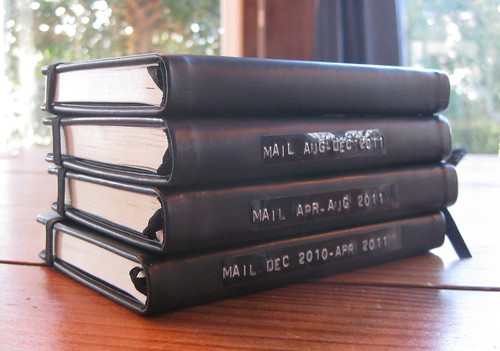
Letter journals for 2011

Postcrossing is also great about emailing monthly and yearly stats. I am not including those numbers in the monthly totals, because Postcrossing doesn't count a postcards as "sent" until it is registered, and it could be registered a month or even two after I sent it. But the yearly totals are fun, so I'll note that of the totals listed above, 326 of the sent items and 333 of the received items were Postcrossing postcards.

If you'll permit me some more characters (in an already lengthy post) of reflection, I have to note that I'm fairly cheered that my sent total is only slightly behind my received for the year. I am many months behind in responding to mail I've received, and I dare not even count the numbers in my current "needs response" (NR) pile, but the total of letters and postcards in that daunting NR pile always seems to hover around 100 or so, dating back for those many months. I don't stay on top of it by any means (obviously!), but I try to keep up a steady stream. And an average of nearly 3 mail items sent per day, with at least one of them a letter, is pretty respectable for me and my crazy schedule; it's what I'd hoped I'd achieved, and I'm pleased and proud that I have managed it. You can tell a lot about my schedule by the month's outgoing tallies; I'm a bit surprised, though, because I always feel the busiest in the winter months, but the lowest outgoing months were actually September, October, and May. Those are also busy months for me, and this year was especially skewed since I got very sick in October and did far less mail than usual that month.

2011: a year in mail

Blah, blah, blah. Numbers are fun, but I hope I can maintain some credibility, after spouting all those figures, when I attest that the spirit of my postal journey is far more about quality than quantity. Postcards do tend to be quicker than letters, but for those items contained in an envelope, I may spend 10 minutes on one or I may spend 6 hours. At the end of the day and the end of the year, I am very happy with the year in mail for 2011. I wish I weren't so behind, but I've been behind for two years now and I doubt I'll catch up anytime soon, so I've given up worrying about that too much.

I'll also err on the side of being a little preachy and note that the months of and following my most productive send numbers were also the richest in received numbers. Here you go, folks, numerical proof: to get a letter, send a letter!

2011: the mail logs

This post has become more loquacious than I ever intended, but I guess some of my favorite posts end up that way. Thanks for bearing with me. It's been a great mail year, full of postal joy and fulfillment... what about you? Was 2011 a good mail year for you, too?

Thursday, August 25, 2011

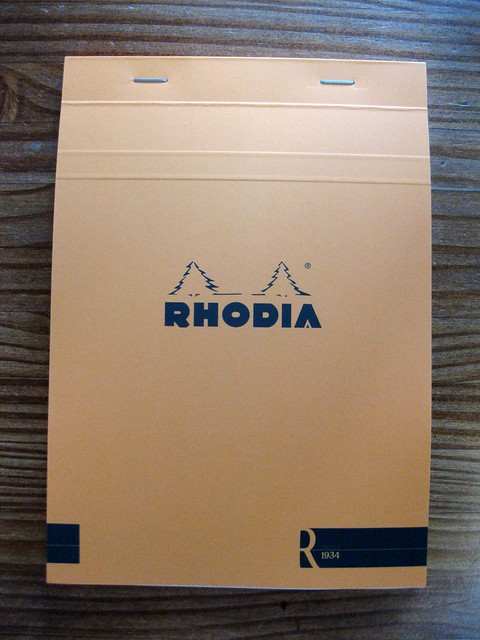
New R by Rhodia tablet: my new favorite paper!

IMG_8794lev

I just got my latest, greatest order in from Goulet Pens, and I couldn't be more excited. I have been eagerly anticipating the new R by Rhodia soft-touch notepads for longer than I even knew. More on that in a moment.

I warn you, this is going to be a long and photo-heavy review. But you already know that if your page is loading as slowly as mine is. I think it will be worth it, though.

First, you might want to acquaint yourself with the hype. Brian Goulet did a wonderful video on his Ink Nouveau blog that gives an excellent review of the new product, and a nice overview and comparison. I wish I had remembered to take a photo of this paper in comparison to other papers, but I didn't - I think he does that in the video. Anyway, worth watching.

IMG_8800lev

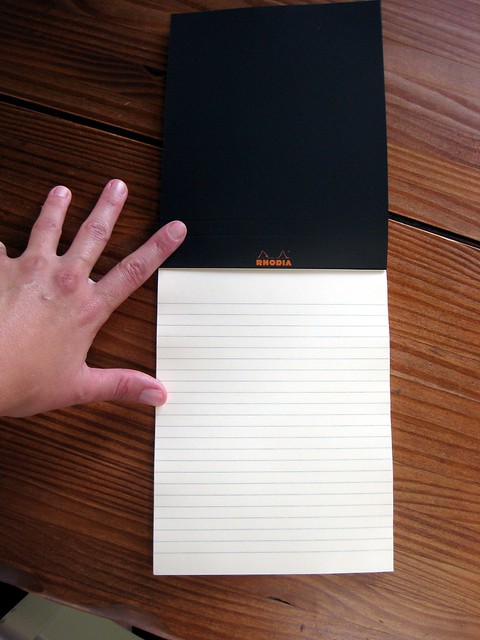
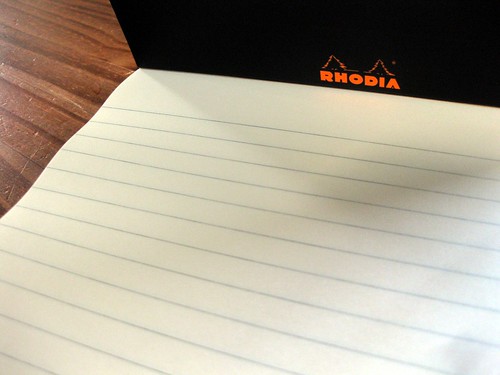
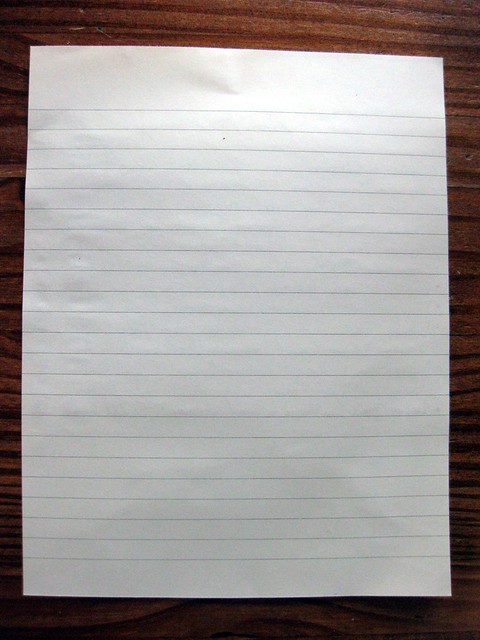
So here is the awesome new paper. It is a gentle ivory/cream color. It does not detract from any ink color, but it's not SCREAMING BRIGHT WHITE like Clairefontaine Triomphe and most of the Clairefontaine notebooks, including my current ink journal. Nor is it screaming bright white like the other, original Rhodia pads.

Inside of new R by Rhodia No.16 tablet, close-up

Also unlike the other Rhodia pads, there is no margin, and the lines (this is also available in blank, but I started out with the lined version) are sort of a soft grey, not blue. Subtle. Nice touch. I like the ruling. It's a good width for me. (I just checked, for those of you that want precision: it's 7mm.)

But it's really about the paper, and how well it takes ink. This new pad is an "upgrade" to 90g paper from the previous 80g. It does feel slightly thicker to the touch. In his video, Brian said it was nearly as smooth as Clairefontaine Triomphe, and I would mostly agree with that, but it doesn't have the Triomphe's "glassy" quality... which, in most cases, is a plus. I wouldn't say there is drag on the paper, and there is definitely not "tooth"... it's just a lovely smooth surface.

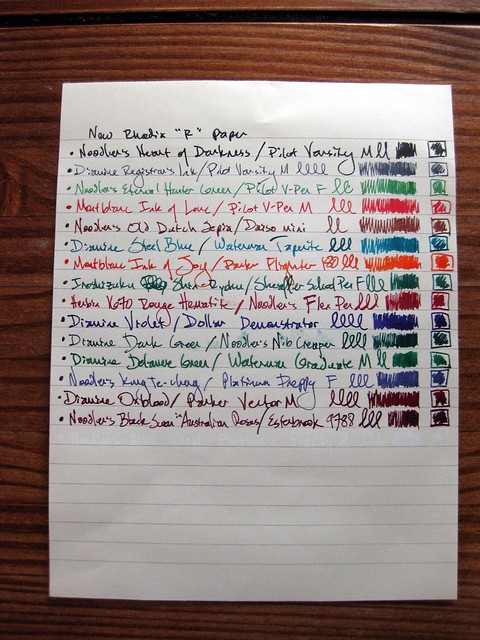
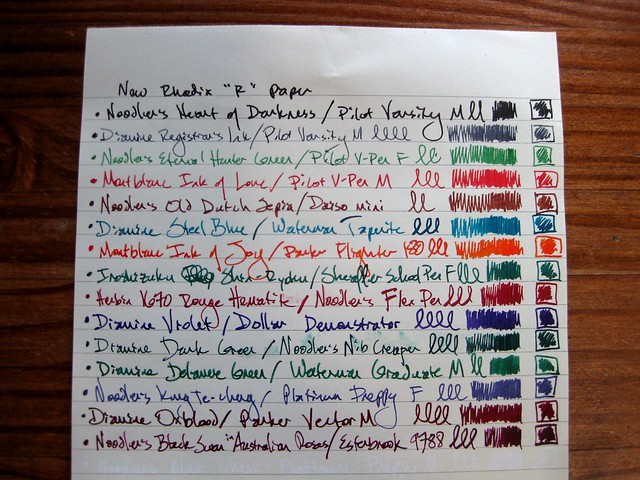
Fountain pen ink test on new R by Rhodia No.16 tablet

Again, though, it's all about the ink. And this is where this paper really excels. For those who like their colors harmonious, I apologize, as I just grabbed pens with excitement in no particular order, other than thinking, "this is a juicy wet pen!" or something like that... really putting the paper to the test, as it were.

IMG_8792lev

As you can see, no feathering. Slight smudging, due to wet inks and my smudgy over-writing hands (+ general impatience). Ink dries significantly faster on this paper than on Clairefontaine Triomphe: a significant plus! All of the inks played nicely, even one of my newest, least favorite inks: Noodler's Old Dutch Sepia; this is the only paper I've tried it on yet where it doesn't feather! (It's humid here in August. That happens. I hope it will be have better in the winter, when everything, including my pens and papers, is less damp.)

Inks and pens shown:
Noodler's Heart of Darkness / Pilot Varsity M
Diamine Registrar's Ink / Pilot Varsity M
Noodler's Eternal Hunter Green / Pilot V-Pen F
Montblanc Ink of Love / Pilot V-Pen M
Noodler's Old Dutch Sepia / Daiso Mini
Diamine Steel Blue / Waterman Taperite
Montblanc Ink of Joy / Parker Flighter 180
Iroshizuku Shin-Ryoku / Sheaffer school pen F
J. Herbin 1670 Rouge Hematite / Noodler's flex pen
Diamine Violet / Dollar Demonstrator
Diamine Dark Green / Noodler's Nib Creaper (firm/non-flex)
Diamine Delamere Green / Waterman Graduate M
Noodler's Kung Te-Cheng / Platinum Preppy F
Diamine Oxblood / Parker Vector M
Noodler's Black Swan in Australian Roses / Esterbrook 9788
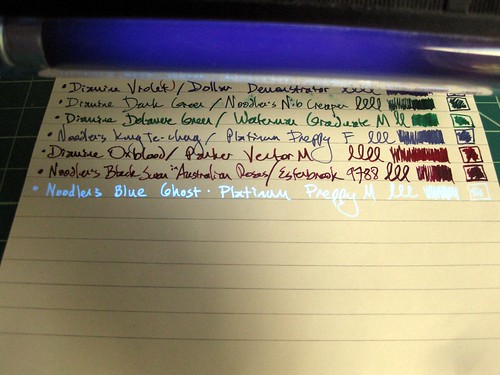
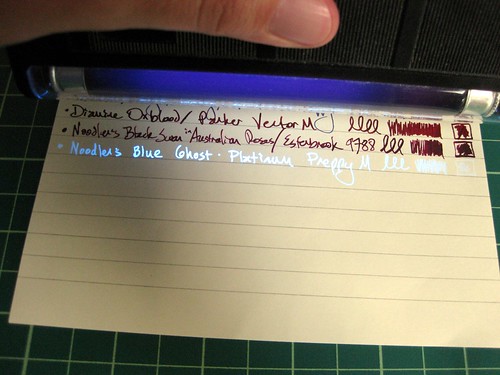
Noodler's Blue Ghost / Platinum Preppy M

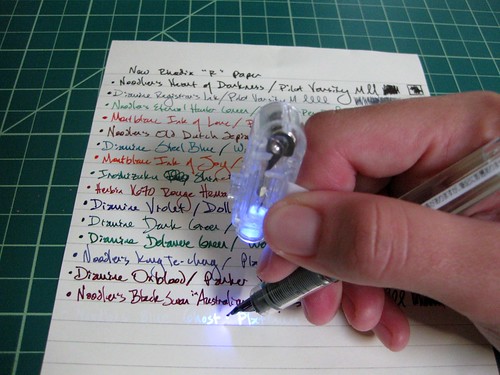
Writing with Noodler's LED backlight on my finger to reveal the Blue Ghost

Slight tangent - if you thought the last line of ink was Noodler's Black Swan in Australian Roses, you thought wrong! Included in my order from Goulet Pens was the awesome Noodler's Blue Ghost invisible ink, which shows up with a black light on non-bleached papers. COOOL! Goulet pens also sells this ingenious set of black light rings that you can attach to your pen or your finger as you write, illuminating in black light just your area of writing. Trust me, this is key: it is eerie to be writing if you can't see what you're writing! I'm writing with a Platinum Preppy M, which came from Goulet Pens already as an eyedropper conversion (and folks, I am happy to pay the extra $2 to Goulet Pens for them to do the eyedropper conversion for me - it's a time-saver, so this pen came all ready to go), and for a specialty ink such as this, I wanted to make sure to use a brand-new pen. Platinum Preppy eyedroppers are one heck of a great bargain for about $6 from Goulet Pens!

Noodler's Blue Ghost under black light

I do happen to have a larger black light, which is handy for the reading part, not so much for the writing... but it allows me to show you the whole line of ink and not just part of a word.

Noodler's Blue Ghost under black light 2

With the ivory color of this paper, this ink looks fabulous! It does not show up at all in my bright white Clairefontaine ink journal... that paper is just too white.

IMG_8793lev

So back to the paper. This photo above is the most exciting photo to me of the whole bunch, and if you're a real fountain pen/paper aficionado, you'll guess why. This is the back of my ink tests page. Not only is there no bleed-through, there's not even any SHOW-through! You can only tell there is even writing on the other side if you look really closely. WOW! And I even flexed my flex nibs with Noodler's BSIAR and Herbin's 1670 Rouge Hematite inks... wet inks in very wet pens! LOVE it. This, as much as anything else, is why this is my new favorite paper. I will use it for second/additional sheets in letters, and I can write on both sides with ease. It's also a great size for the sort of stationery I prefer to use.

IMG_8796lev

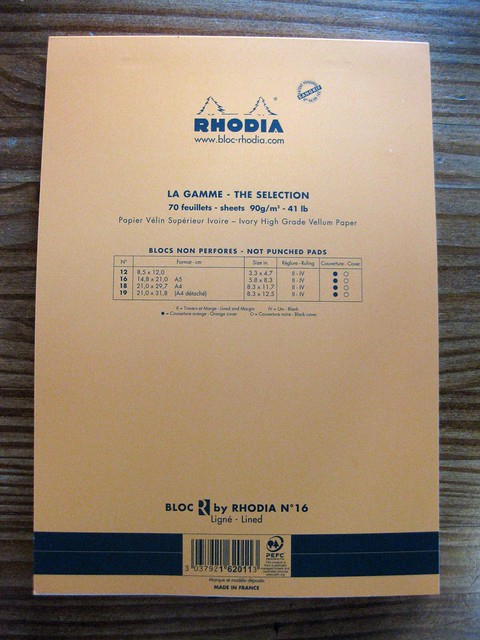
And finally, the back of this wonderful tablet. It comes in many sizes, both lined and blank, with black and orange covers. (The inside of the cover has the inverse color.) I chose orange this time, since my other Rhodia pads have black covers.

Important note: I am not affiliated with Goulet Pens, I am just a happy repeat customer. Here's the buying info: R by Rhodia No.16 tablet, 70 sheets for $7. This stuff is new and freshly out, but other retailers may be carrying it now as well.

Wrap-up:
If you wanted pretty much the paper that comes in Rhodia webnotebooks but in micro-perf tablet form, this is it.
If you wanted "off-white Clairefontaine," this is it.
If you want a great, high-quality writing paper for a great value, this is it.

Highly, highly recommended!